
Use Cases

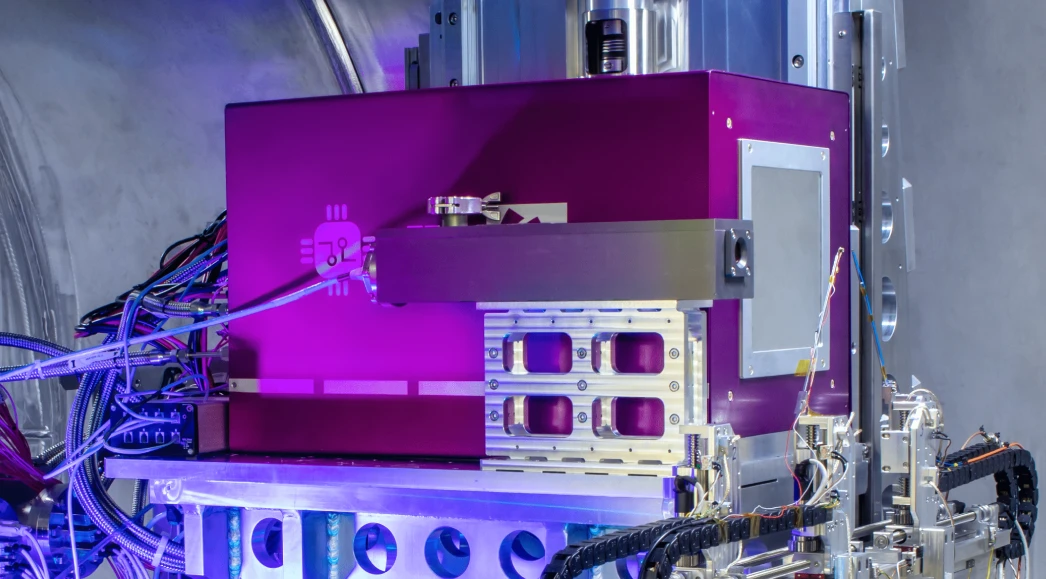
Sirius - CATERETÊ Beamline
The CATERETÊ beamline (Coherent X-ray Scattering) offers unique opportunities for imaging and dynamics experiments in biology and solid-state physics, with a special focus on the application of coherent X-ray scattering and diffraction techniques.
Experiments on coherent X-ray diffraction imaging (CXDI) and X-ray photon correlation spectroscopy (XPCS) are the focus of activities on the CATERETÊ beamline. In addition, time-resolved small-angle X-ray scattering (SAXS) and ultra-small-angle scattering (USAXS) are also performed, which benefit from the high flux of the radiation source.

Sirius -
EMA Beamline
The EMA Beamline (Extreme Condition Methods of Analysis) specializes in making a significant contribution to the study of materials under extreme conditions, where high brilliance is crucial – in particular, a high photon flux of up to 1 × 10¹³ photons per second combined with the ability to focus beams to a size of only 0.1 × 0.1 μm².
This is particularly relevant for the study of materials under extreme thermodynamic conditions such as pressure, temperature and magnetic field.
Articles for Reference:
DOI: 10.1103/PhysRevB.111.144103
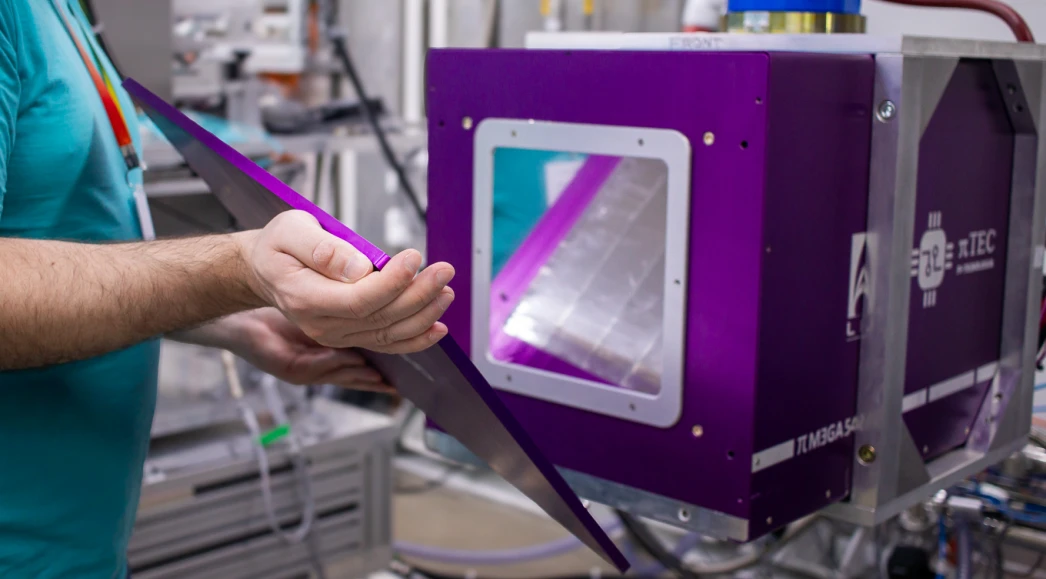
Sirius - CARNAUBA Beamline
The CARNAÚBA Beamline (Coherent X-ray Nanoprobe Beamline) is the longest beamline of Sirius with a length of about 145 meters between the light source and the sample area. This distance enables a high optical reduction and thus nanometric spatial resolutions.
It has two terminal stations: TARUMÃ, with a sub-micron beam and variable sample environment; and SAPOTI, where the beam size reaches 30 nm and the sample environment is cryogenic and kept in ultra-high vacuum
Articles for Reference:

Sirius -
PAINEIRA Beamline
The Paineira beamline at is dedicated for high-resolution and rapid X-ray diffraction (XRD) studies of polycrystalline materials. It supports in situ and operando experiments, allowing scientists to monitor structural changes, transient crystalline phases, and kinetic processes in real time across a wide range of research fields.
Equipped with advanced automation such as robotic sample handling, multiple sample environments, and fast 2D detectors like the PIMEGA 450D, the beamline can collect full diffraction datasets within seconds, making it suitable for high-throughput studies and experiments under realistic operating conditions.
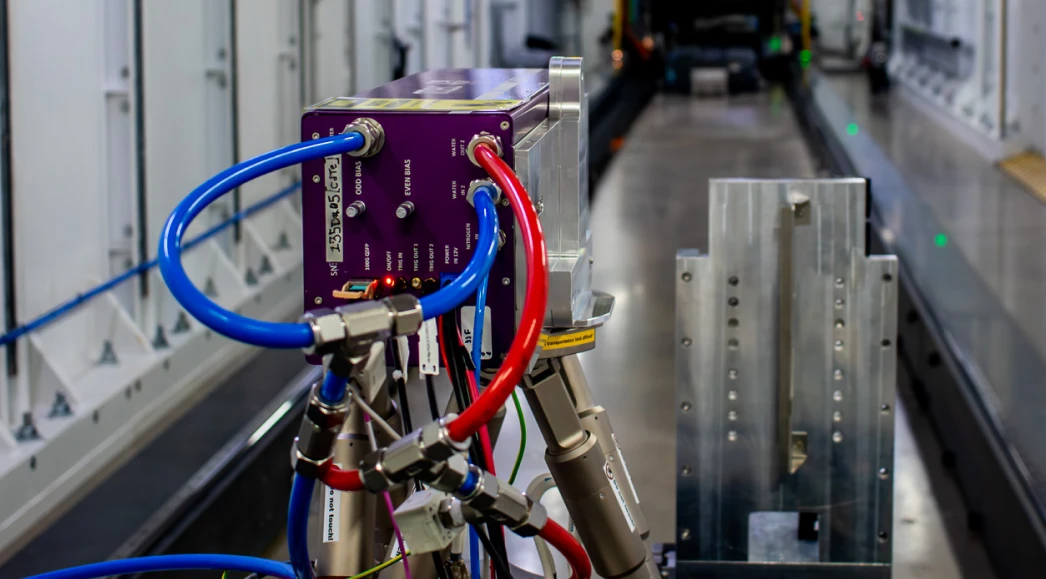
Sirius -
MOGNO Beamline
MOGNO is designed to be a world-leading high-brilliance micro- and nano-imaging beamline using monochromatic tender (22 and 39 keV) and hard (67.5 keV) X-rays, in a cone-beam geometry. This design is optimized for continuous zoom tomography, where the same specimen can be studied at low and high-resolution. MOGNO will also be dedicated to 4D (time-resolved) imaging through in-situ experiments.

International Experience – RAD Detectors
PITEC detectors are already operating or being tested at leading synchrotron facilities across four continents, including Brazil, USA, Sweden, France, and Research Institute (Germany).